01Today
 Illustrative image
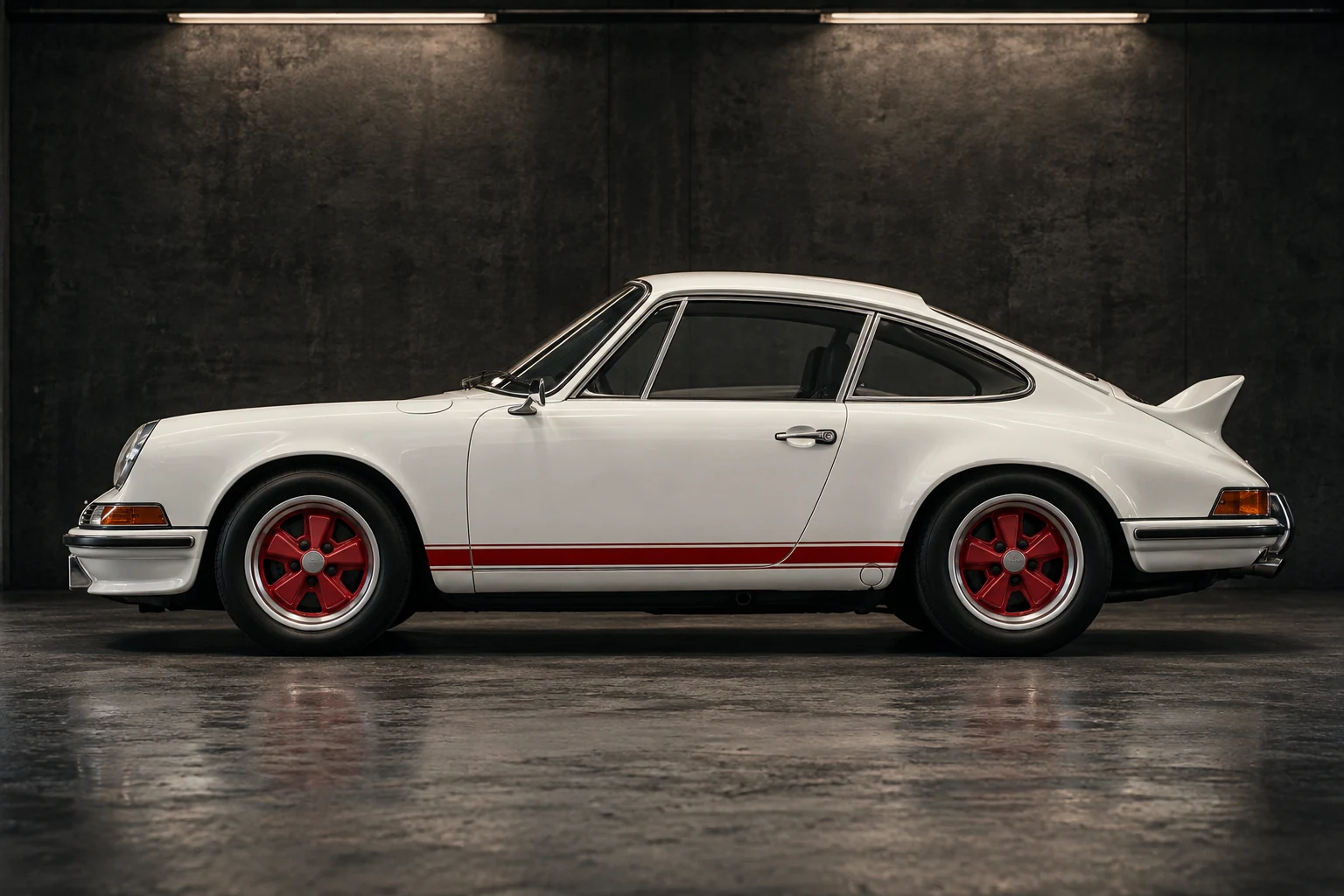
Reference car
A complete 1973 Carrera-style long-hood, a surviving panel, or a factory drawing. The truth we measure against.
Future workflow & capability roadmap
Traditional coachbuilding and modern metrology do not have to compete. We are working toward a workflow that combines both.
A surviving component, original body panel, reference vehicle, drawing, or existing geometry can potentially become the starting point for a digital reconstruction. From there, dimensional information can be transformed into CAD surfaces, tooling, bucks, templates, fixtures, machining instructions, or forming references.
The computer establishes geometry.
The craftsman makes it belong on the car.
Illustrative image1973 Carrera RS-style long-hood · the reference car for everything on this page
We are building the bridge between old-world coachbuilding and digital manufacturing.
Every capability on this page carries one of three labels. They are there so you never have to guess what exists today.
Reference car → Finished Porsche
Digital technology does not replace craftsmanship. It gives the craftsman better information. Follow the Carrera from the reference car to the finished body.
01 / 09
Illustrative imageA complete 1973 Carrera-style long-hood, a surviving panel, or a factory drawing. The truth we measure against.
 Concept image
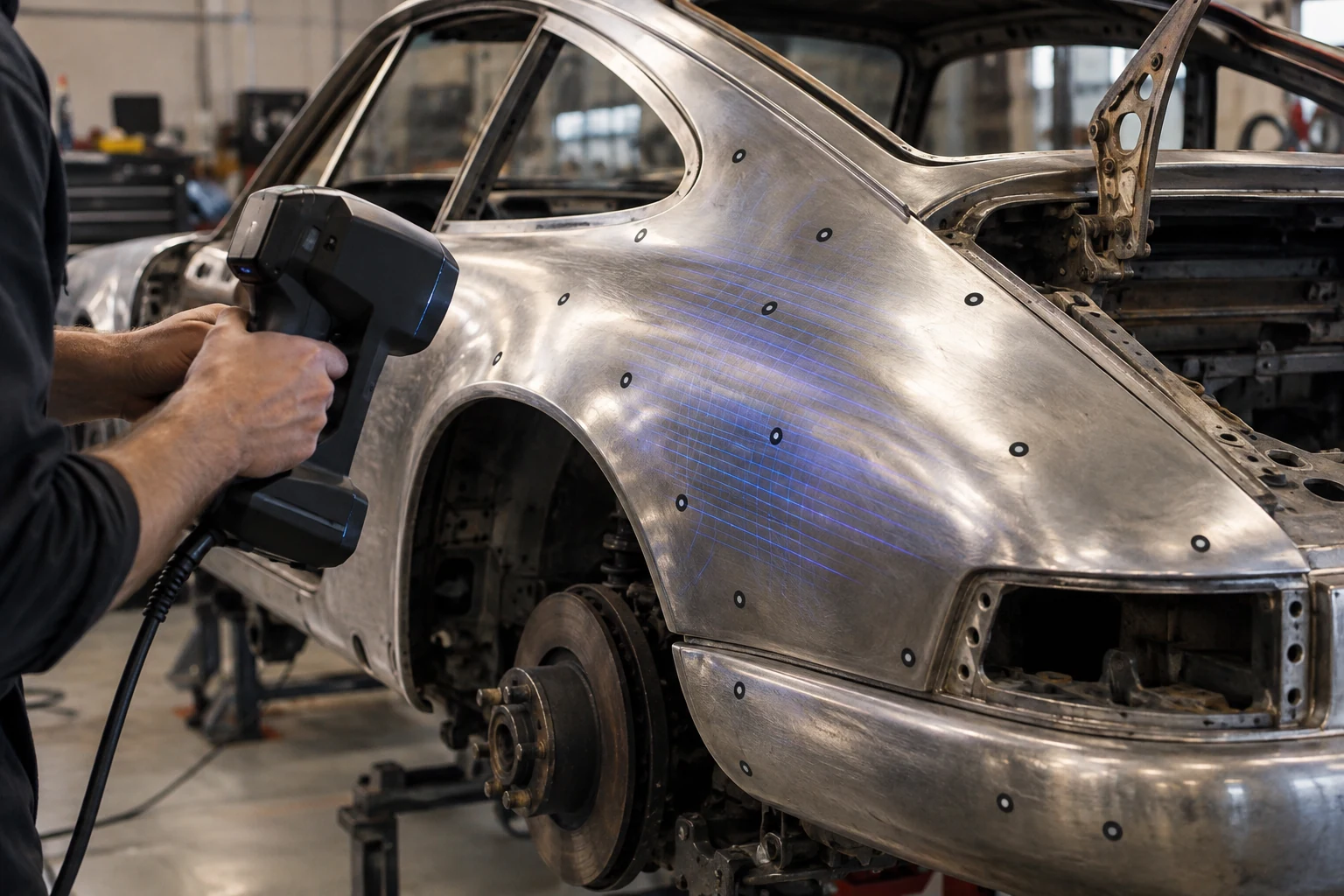
Metrology-grade scanning captures the geometry without touching it. The untouched scan is archived before anything else happens.
 Concept image
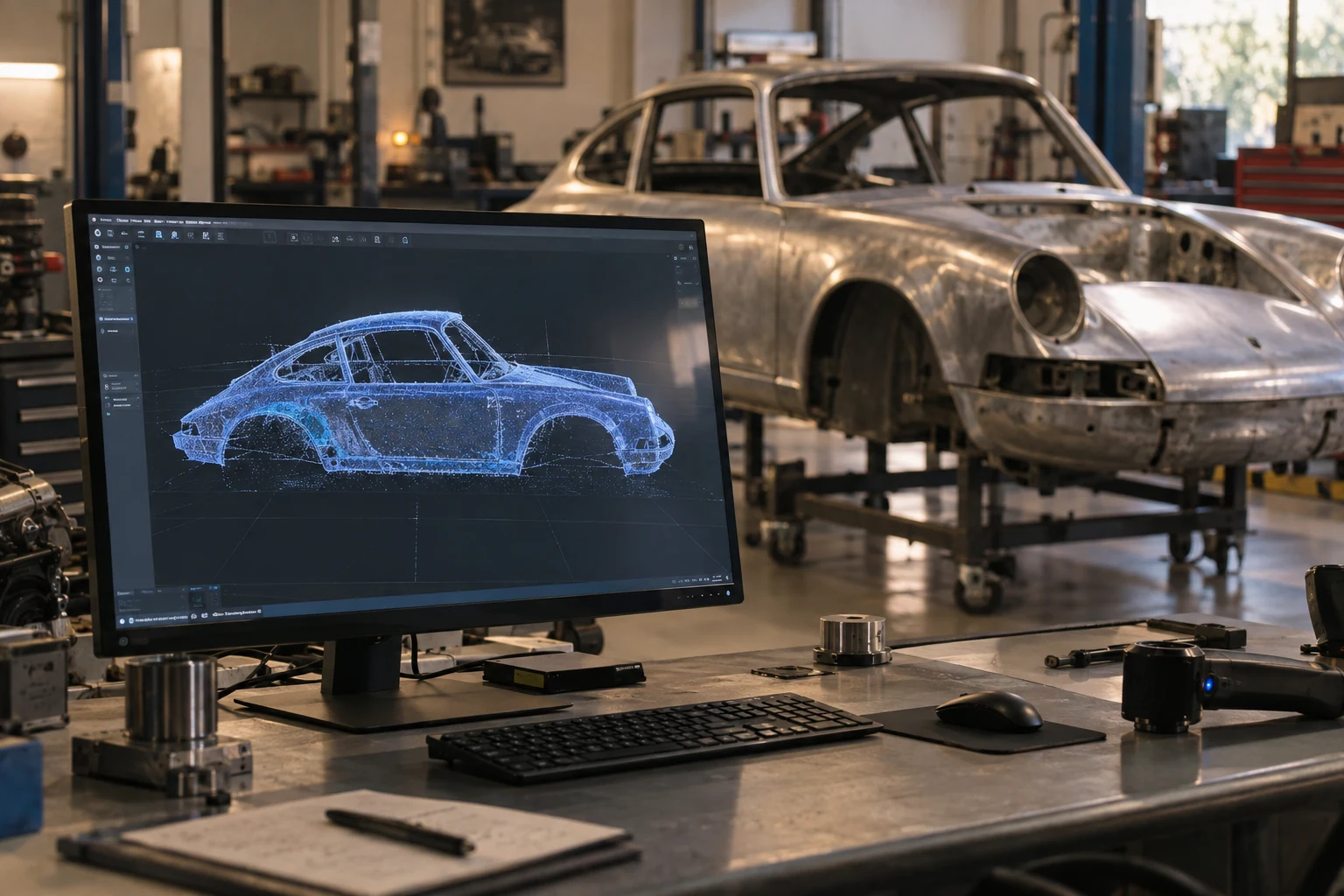
Point cloud becomes a watertight mesh. Left and right sides can be compared; damage can be separated from design.
 Concept image
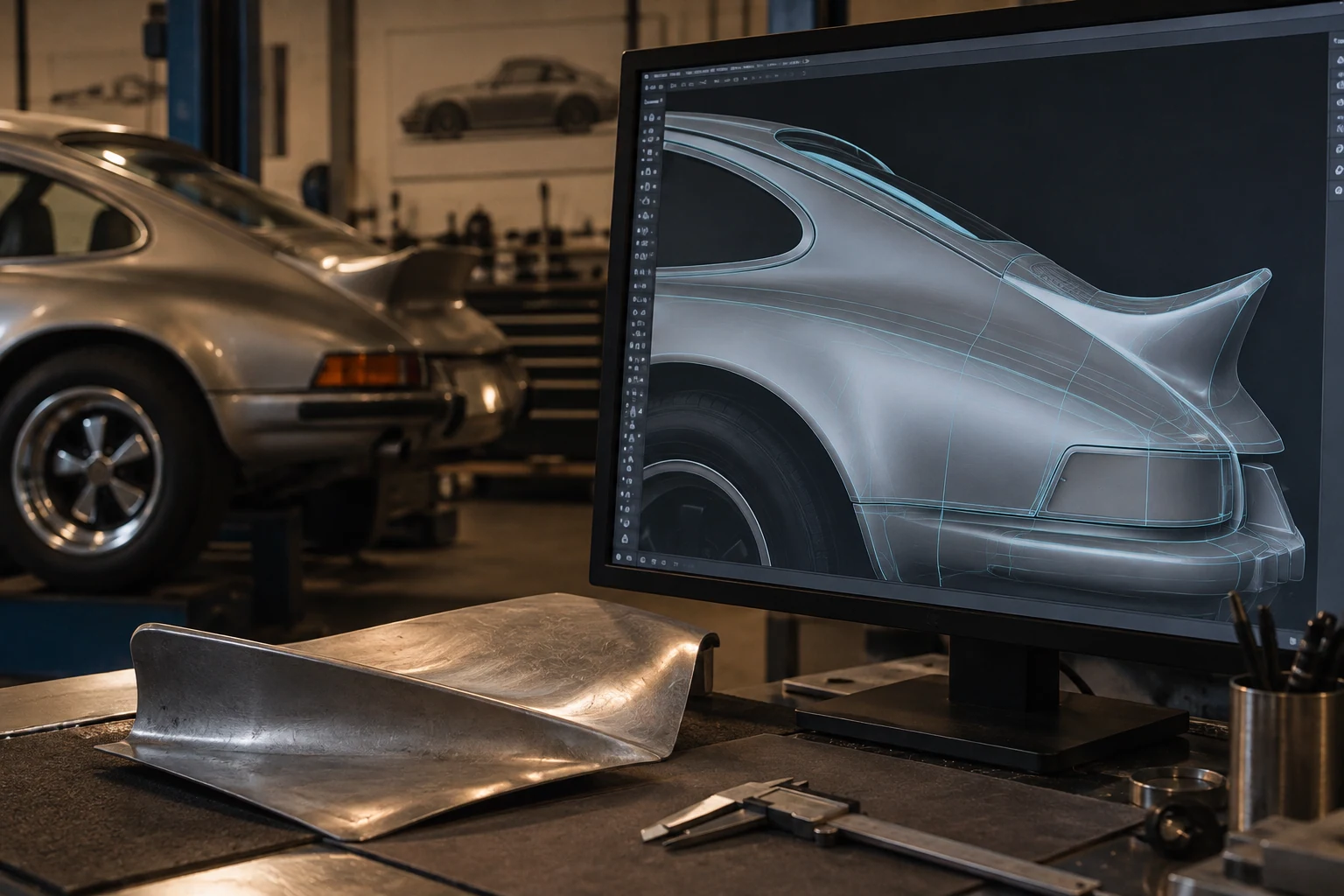
Clean engineering surfaces are rebuilt over the mesh. The panel is now measurable, reproducible information.
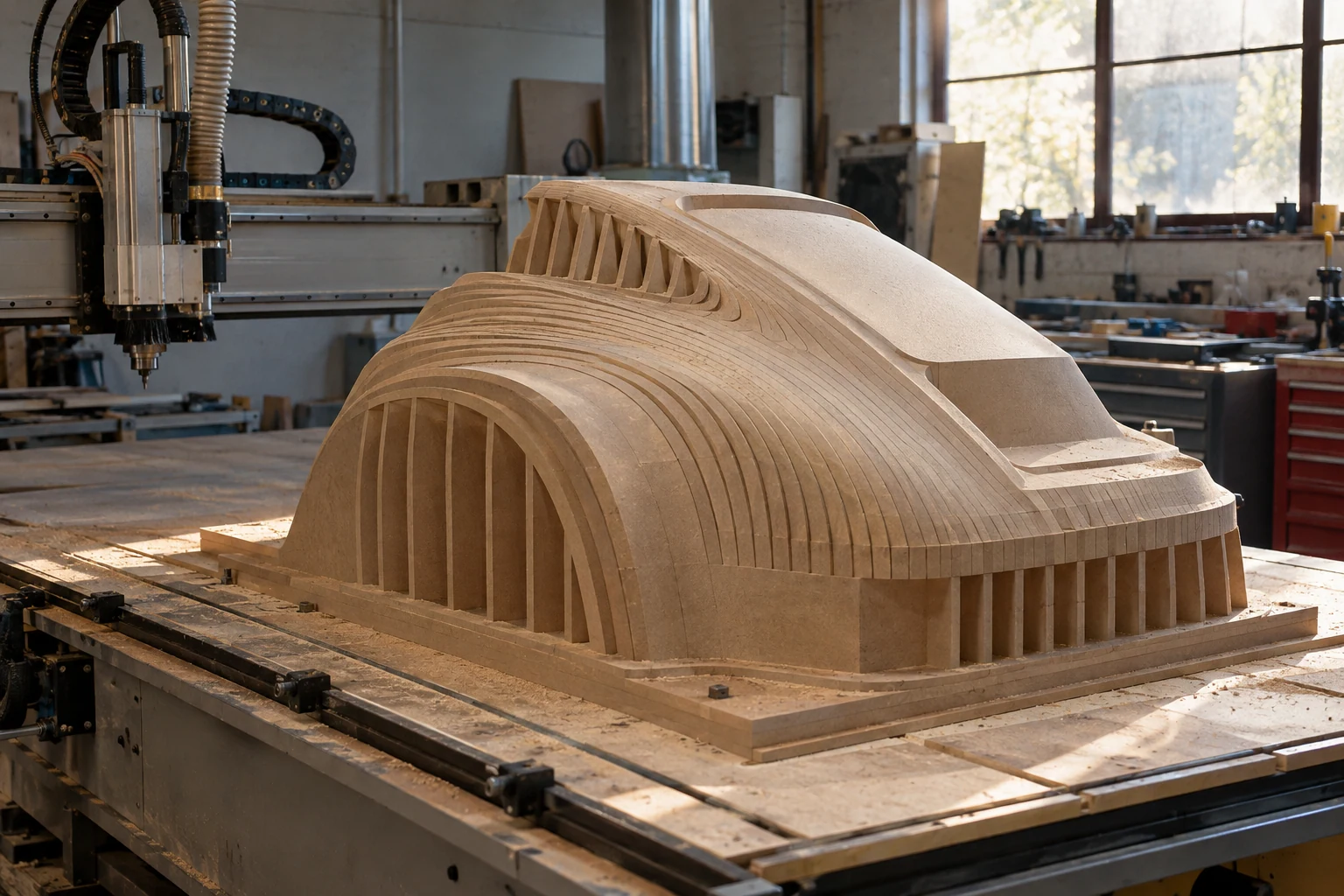 Concept image
The surface drives station bucks, hammer forms, checking fixtures and templates, CNC-routed in tooling board or built by hand in wood.
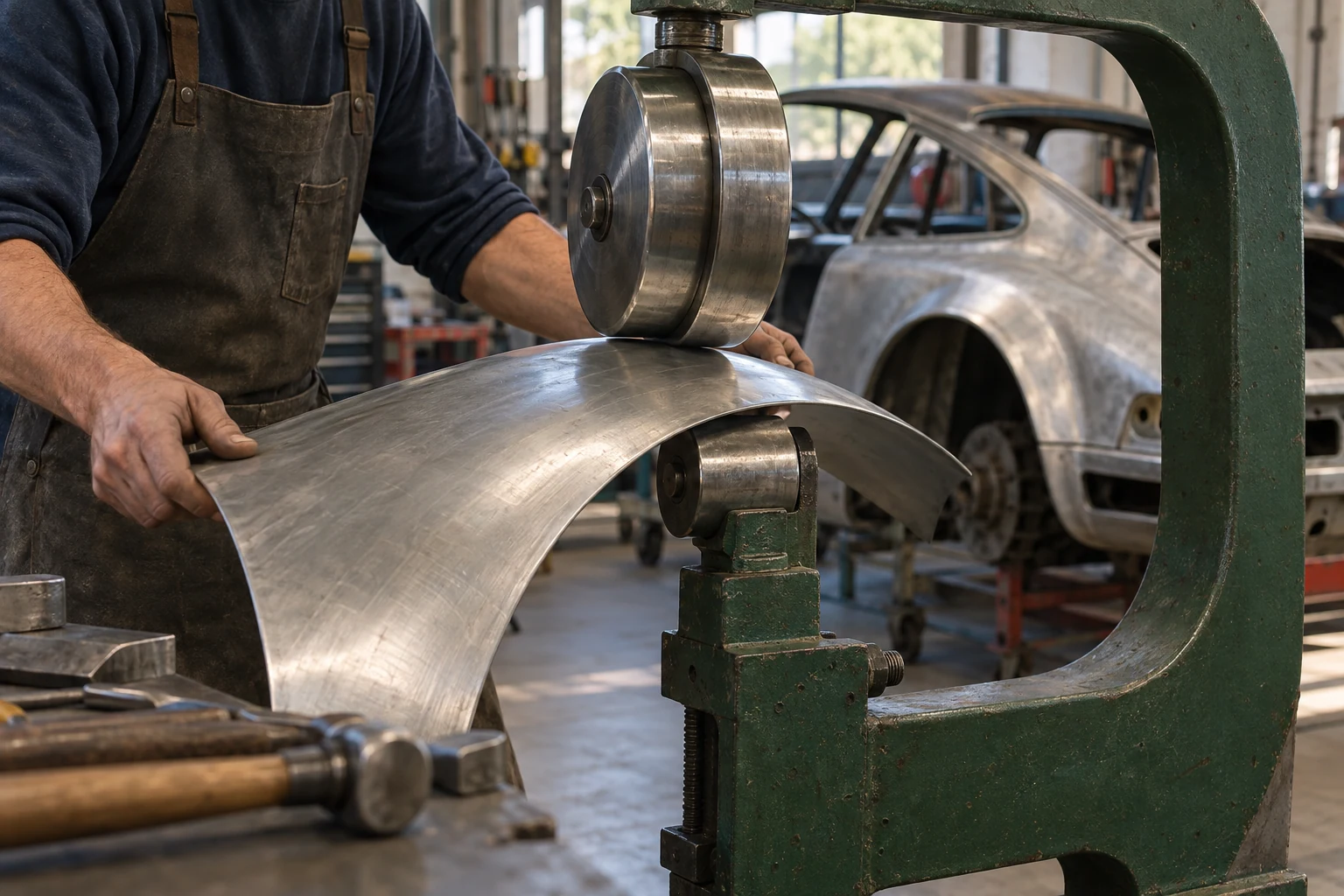 Illustrative image
Sheet becomes shape over the buck: English wheel, power hammer, shrinker and stretcher, hands and eyes.
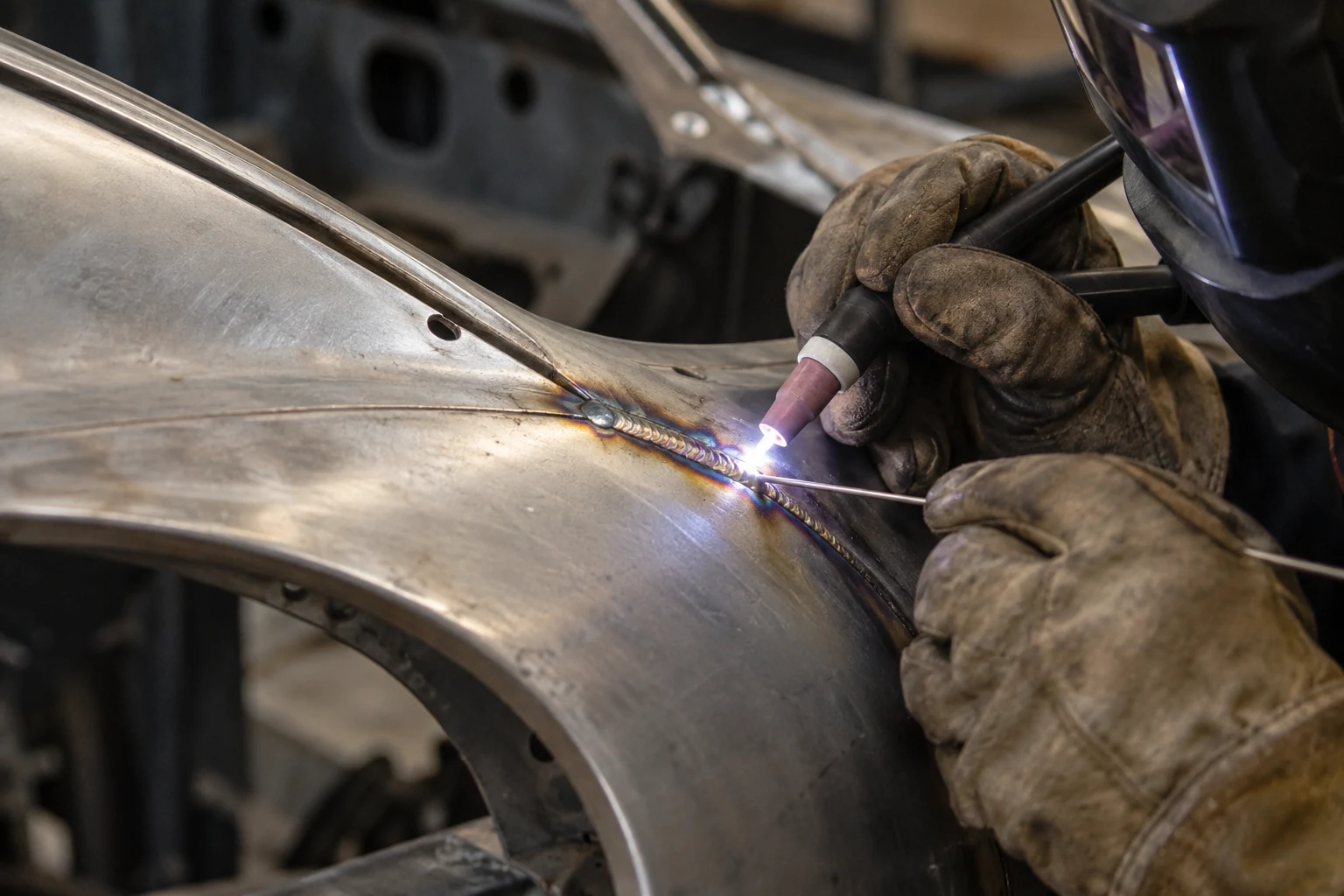 Illustrative image
Planishing, metal finishing and welding bring the panel to a surface that needs no filler to look right.
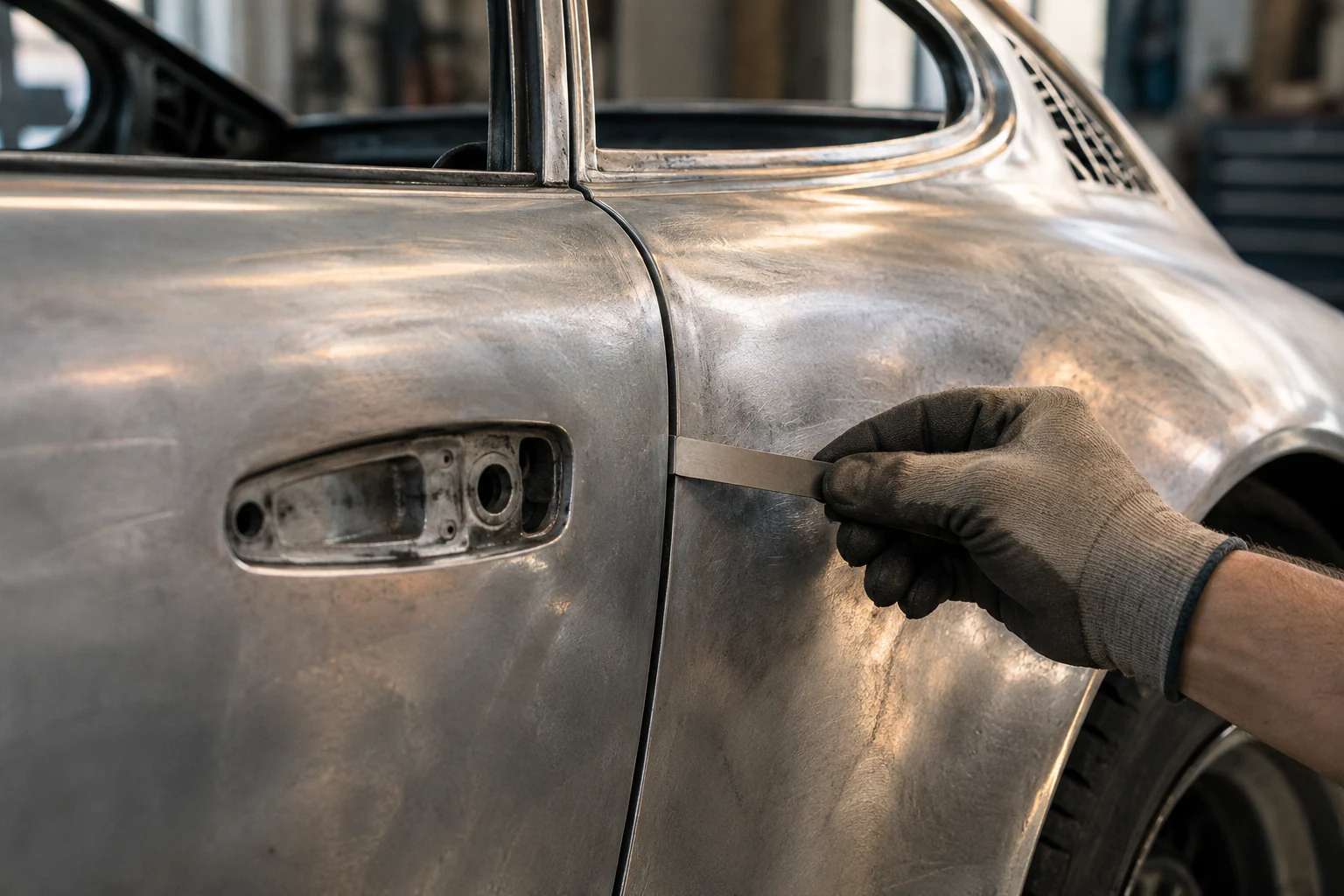 Illustrative image
The panel meets the car. Gaps, flush, mounting points and the flow into neighbouring panels are corrected by hand.
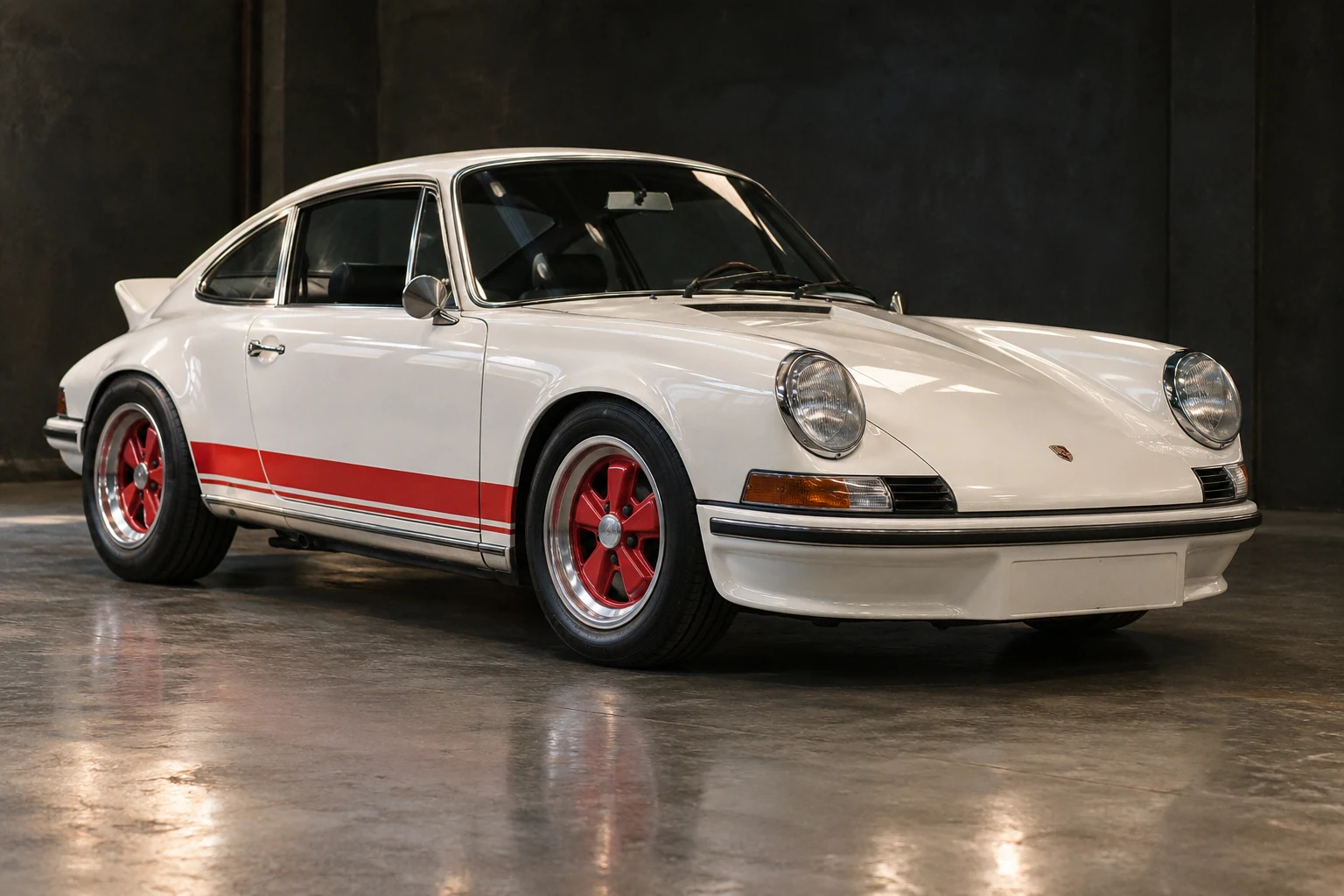 Illustrative image
When light moves across the body, nothing about how it was made should matter. Only the shape remains.
Conceptual workflow. Stages marked In development or Integrated as needed are not performed in-house today.
01—Capture
We are evaluating and integrating metrology-grade scanning technologies appropriate for automotive reverse engineering.
Capture is the foundation of everything downstream. The scanner's job is to record the geometry of what exists, whether that is a complete car, a single bracket, or a damaged panel, with enough accuracy that the rest of the workflow can trust it.
The untouched scan is treated as archival data. Every later step works on a copy.
Technologies being evaluated for integration into our workflow
Named as examples of the category under evaluation. We do not claim ownership of a specific scanner unless verified and stated on this page.
Concept imageComplete vehicle geometry
Body panels
Engine components
Suspension components
Interior components
Brackets and mounting interfaces
Damaged components
Left / right component reconstruction
Panel-gap analysis
Reference-car documentation
Hand measurement, templates and profile gauges
Photographic documentation of reference cars
Contract scanning through metrology partners
For projects that need it before in-house capture is proven.
02—Reconstruct
Raw scan data is only the beginning.
The resulting mesh or point cloud can be transformed into usable engineering geometry using reverse-engineering and surfacing workflows. Noise is removed, damage is separated from design intent, and clean surfaces are rebuilt over the measured data.
This allows an existing component to become measurable, reproducible engineering information rather than merely a physical reference sitting on a workbench.
Reference technologies can include
Listed as the class of tools the workflow is being built around, not as a statement of current licences.
Concept imageWatertight mesh
Class-A style surfaces for body panels
Solid models for brackets and machined parts
Section drawings and station lines
Left / right symmetry comparison
Deviation reports against the original scan
Engineering support through CAD partners
03—Tooling & bucks
This is particularly important for Porsche bodywork.
A reconstructed body surface can be used to produce the physical references a coachbuilder has always needed, but with geometry taken from the car rather than from the eye alone.
CNC routers can translate digital body geometry into physical bucks made from suitable tooling materials. This creates the bridge the whole workflow depends on.
Concept imageForming bucks
Built by hand today; CNC-routed from surface data in development.
Checking fixtures
Panel templates
Hammer forms
Welding fixtures
Assembly jigs
Trim templates
Machining fixtures
Wood and MDF station bucks
Composite-skinned bucks
CNC-routed tooling board
Machined aluminium forms
Section 03 · Tooling & bucks
Scroll to move from finished paint to the scan it started from. Rear quarter highlighted as the principal example.
The finished car. Where every decision is finally judged.
Technical visualisation · not a photograph · 1973 Carrera-style long-hood, rear quarter
04—Form
We are evaluating both traditional and emerging approaches to low-volume sheet-metal manufacturing.
Traditional coachbuilding is not a fallback in this workflow. It is the core. A buck derived from a scan gives the craftsman better information; it does not change what the English wheel is for.
Digitally controlled sheet forming may eventually allow low-volume panels to be produced directly from CAD data without the enormous tooling investment associated with conventional automotive stamping. That is exactly the type of technology we are evaluating for historically significant, extremely low-volume automobiles.
Digital and advanced forming under study
We do not own a digital sheet-forming system and do not build our manufacturing strategy around any single manufacturer. The category is being studied as the technology matures.
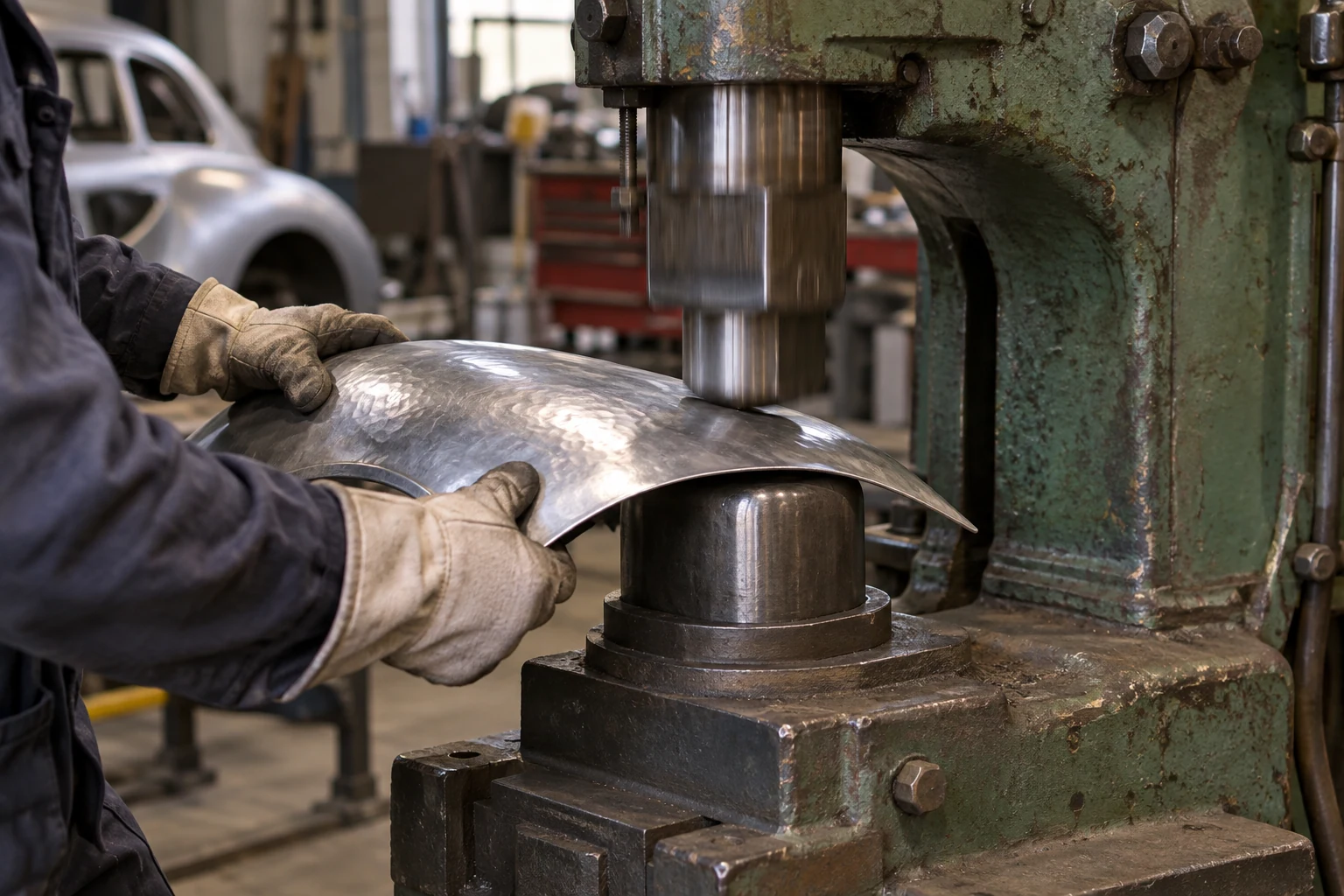 Illustrative image
English wheel
Power hammer
Planishing hammer
Shrinker / stretcher
Hand forming
Hammer forms
Forming bucks
Digital sheet forming
Incremental forming
Low-volume pressed blanks through partners
05—Cut
CAD information becomes blanks, structure and tooling.
Once geometry exists digitally, flat and machined components can be produced from it with far less interpretation. Blanks are cut to the developed shape, brackets are profiled, and fixtures are machined to the same model the panel was formed from.
Where the workshop does not run the equipment, the work is placed with qualified manufacturing partners against our drawings and checked on return.
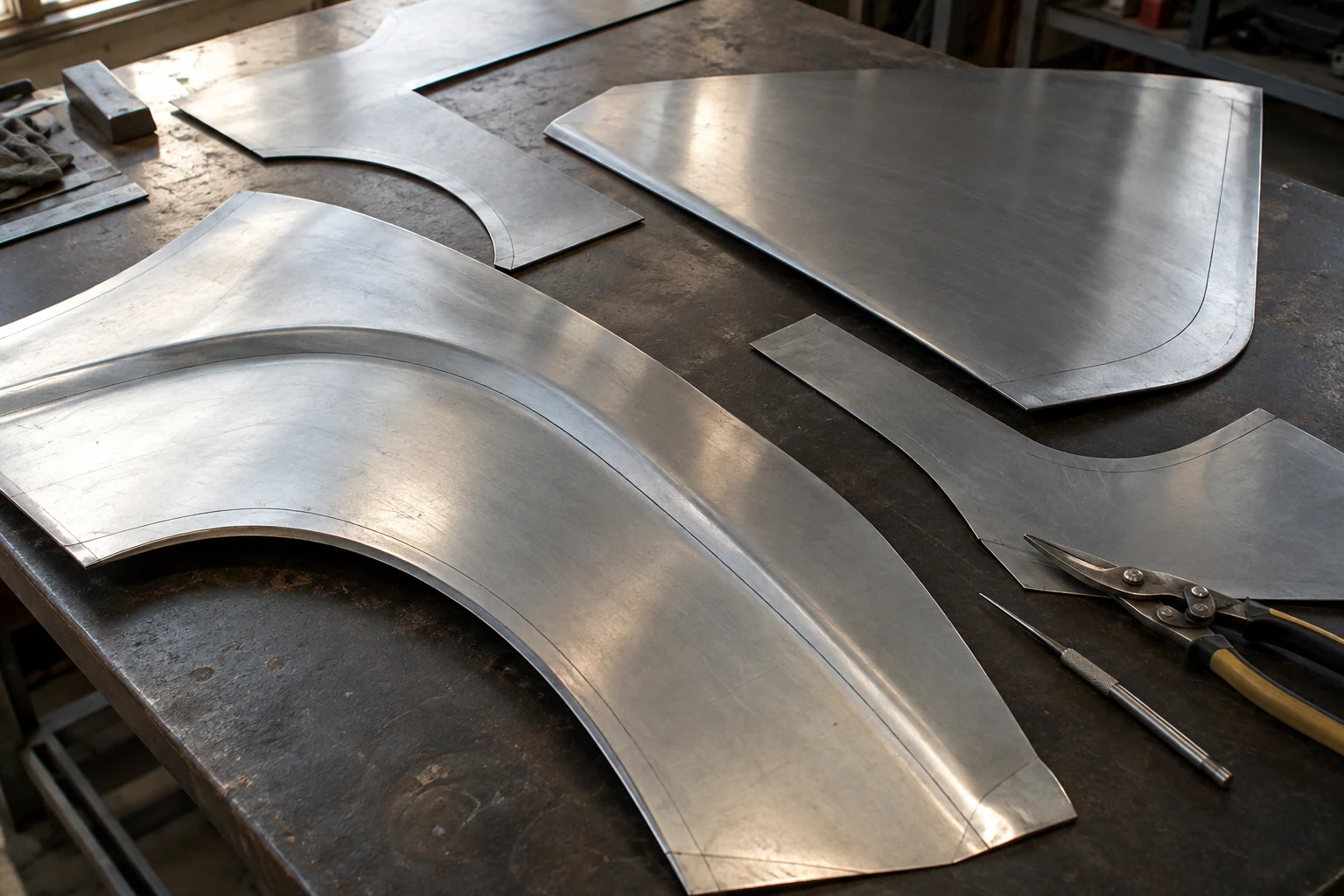 Illustrative image
Fiber laser cutting
Waterjet cutting
CNC routing
In-house routing for tooling board is in development.
CNC machining
CNC press-brake forming
Manual shear, brake and plasma
Sheet-metal blanks
Structural components
Brackets and reinforcements
Fixtures, jigs and templates
Tooling
06—Join
The digital model eventually has to become a Porsche.
Joining is where the car's history matters most. Historical construction methodology, material compatibility, structural requirements and the intended use of the vehicle determine the correct process, not convenience.
A spot-welded factory seam is reproduced as a spot-welded seam. A hand-formed aluminium panel is gas- or TIG-welded and metal-finished. Structure is repaired to be structure.
Illustrative imageAC/DC TIG welding
MIG where appropriate
Resistance spot welding where appropriate
Metal finishing
Panel alignment
Fixture welding
Structural repair
Hand finishing
07—Fit
A scanner can capture geometry.CAD can reconstruct a surface.A CNC machine can manufacture tooling.A forming process can create a panel.None of those things can simply declare the restoration finished.
The panel still has to meet the Porsche.Its gaps have to work.Its surfaces have to flow.Its neighbouring panels have to agree.Its mounting points have to align.
And when the light moves across the finished body, nothing about the technology used to create it should matter.Only the shape should remain.
Trial fitting against the actual vehicle
Gap and flush adjustment
Surface continuity across panels
Mounting-point correction
Scan-based gap verification
Not a record of completed work. A description of how an unavailable long-hood component could be produced.
The 1973 Carrera use case
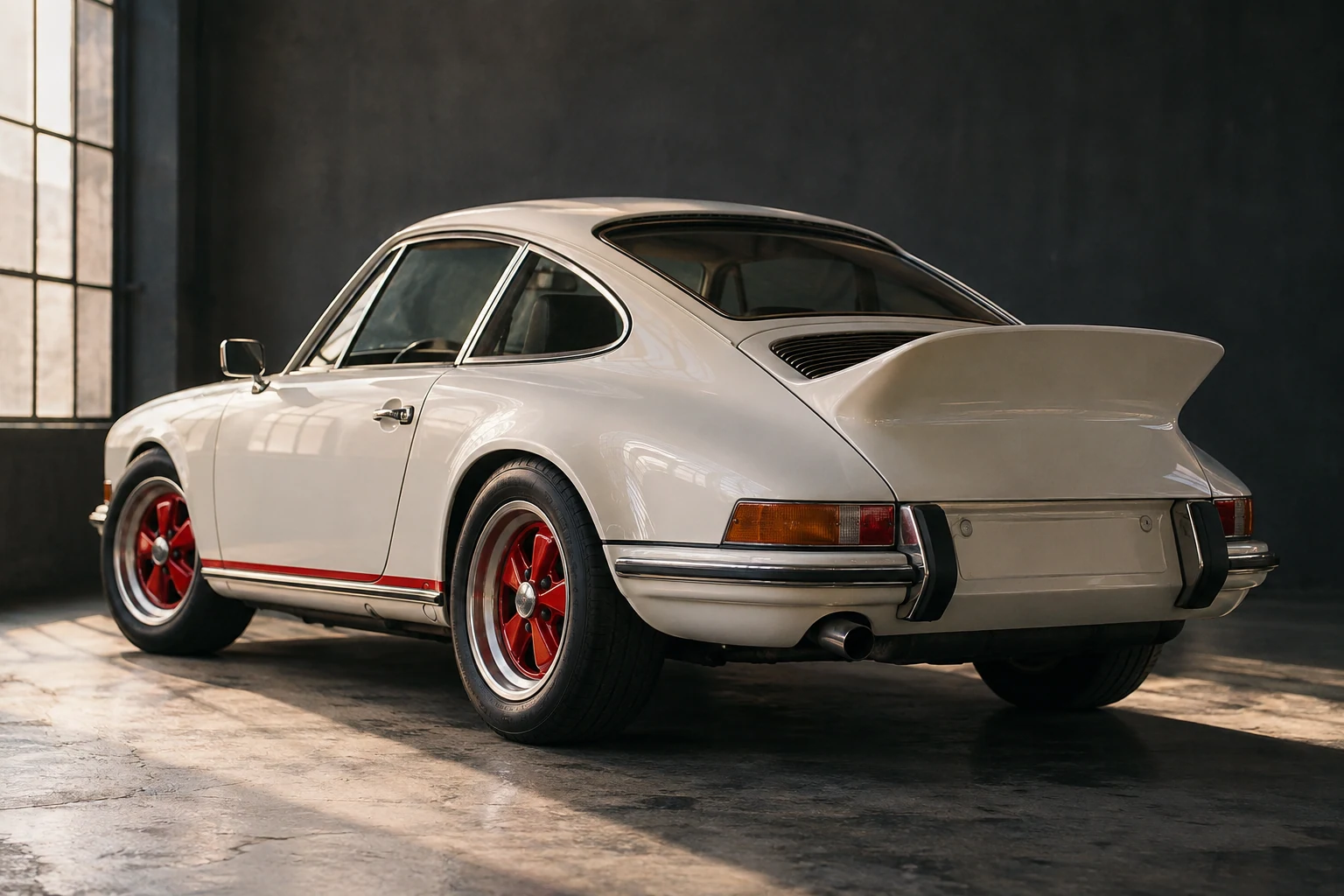 Illustrative image
Step 1Locate an appropriate original or reference component or vehicle.
Step 2Digitally capture the geometry.
Step 3Preserve the untouched scan as archival reference data.
Step 4Reconstruct clean engineering surfaces.
Step 5Compare left/right geometry and surviving factory references.
Step 6Develop a forming buck, fixture, or manufacturing strategy.
Step 7Create the initial metal component.
Step 8Hand-form and finish where required.
Step 9Trial-fit against the actual vehicle.
Step 10Correct gaps, interfaces, mounting points, and surface continuity.
Step 11Finish and document the component.
Step 12Retain the manufacturing data for future restoration work where legally and contractually appropriate.
Then
What can be transformed
The same process applies to an increasingly valuable 930, where the problem is rarely a whole body and more often the hundred small things a restoration cannot buy.
How difficult the problem can become
The 959 remains the technological ceiling. The same fundamental methodology becomes particularly valuable when dealing with a car produced in extremely limited quantities with specialised, model-specific components.
For a 959, digital preservation of an existing component can be nearly as important as manufacturing its replacement. Capture is non-destructive, the archive comes first, and the repair or reproduction strategy is decided only after engineering analysis. We do not casually modify or rebody cars of this kind.
We do not casually modify or rebody 959s. Preservation of the original component comes first.
Manufacturing philosophy
Porsche restoration already benefits from an extraordinary international network of manufacturers, restoration suppliers, machine shops, craftspeople, and specialists. If the correct component already exists, manufacturing another one makes little sense.
Our long-term objective is different: build the digital and physical capability necessary to solve the problems the existing supply chain cannot.
That could mean
One bracket.
One body panel.
One obsolete mechanical component.
One fixture.
Or eventually an entire set of replacement bodywork for a restoration where no practical supply exists.
The digital archive
Where ownership, intellectual-property rights, customer agreements, and applicable law permit, project geometry can become part of a controlled internal technical archive. The aim is a serious restoration knowledge base, not a folder full of CAD files.
Potential records
Access, retention and reuse are governed by the owner's agreement and applicable law for every project.
Intellectual property and authenticity
Scanning an original Porsche component does not automatically grant the right to commercially reproduce protected intellectual property.
We do not reproduce Porsche trademarks, logos, protected designs, supplier IP, or proprietary components without appropriate rights.
Preservation and restoration work is distinct from unauthorised commercial reproduction, and our language and our contracts keep it that way.
Reproduction components are never used to create false provenance. A recreated Carrera RS-style component does not transform another 911 chassis into an authentic Carrera RS.
A reconstructed 930 component does not acquire the identity or provenance of the reference vehicle.
Concept · intended physical environment
The workflow laid out as a floor: the car moves left to right, and the material gets more physical at every bay.
Point cloud
DevelopingClean, temperature-stable room for scanning complete cars and components.
Surface
DevelopingSurfacing, drawings, symmetry comparison and the archive.
Wood and tooling board
PartnerRouted bucks, fixtures and templates from the model.
Raw aluminium and steel
TodayEnglish wheels, power hammer, shrinkers and hammer forms.
Welded structure
TodayTIG, spot welding, fixtures and structural repair.
Fitted metal
TodayTrial fitting, gaps, flush and metal finishing.
Primer and colour
PartnerDowndraft booth through our paint partner until an in-house booth is justified.
Finished panels
TodayGlass, trim, mechanicals and interior.
Finished Carrera
TodayLight moved across every panel, documented, signed off.
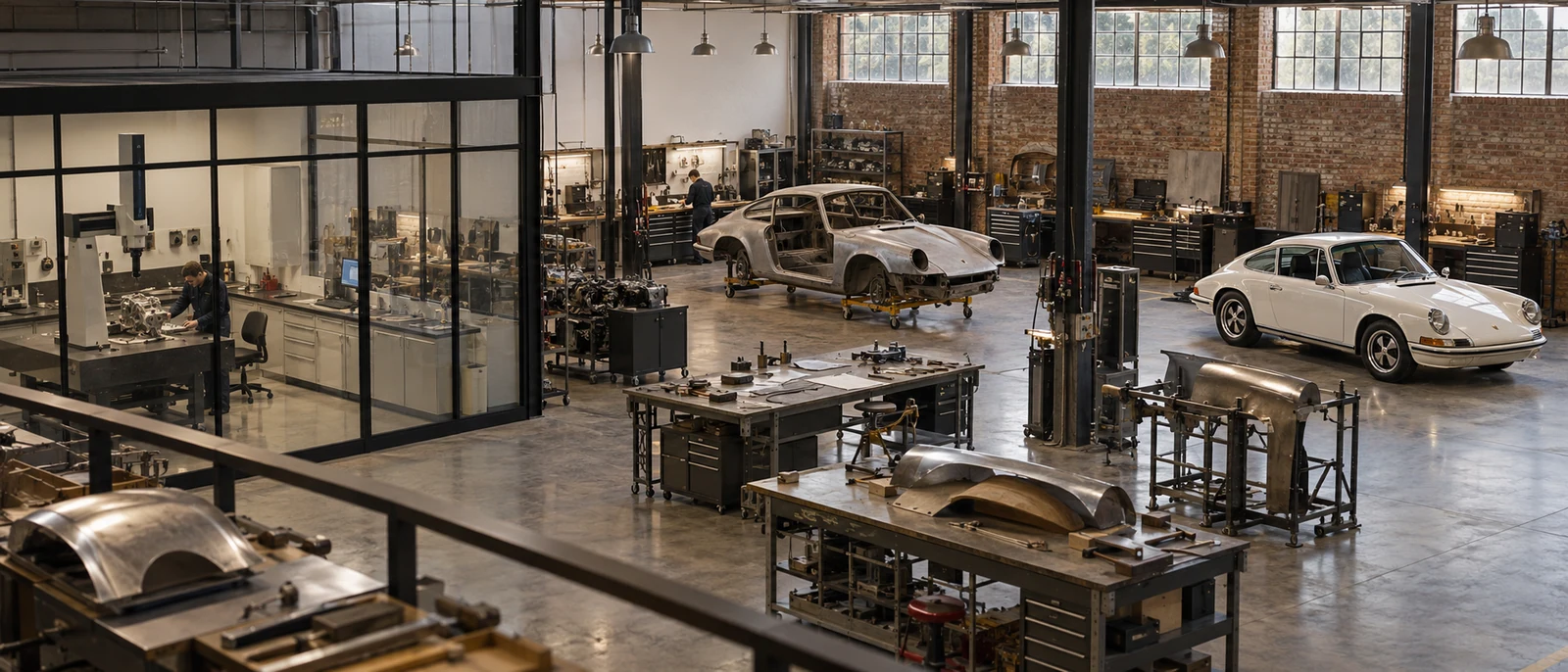 Concept image
Concept layout. Bays marked In development do not exist yet.
The 1973 Carrera is the icon.
The 930 demonstrates what can be transformed.
The 959 demonstrates how difficult the problem can become.
The digital workflow explains how we intend to solve it.
This is not another shop installing commercially available fiberglass panels onto old 911s. The ambition is to combine restoration, coachbuilding, metrology, CAD, digital manufacturing, machining and human metalwork into a modern Porsche restoration workflow capable of supporting cars for decades after their original parts supply disappears.
RestorationCoachbuildingMetrologyCADDigital manufacturingMachiningHuman metalwork